Designing Microlearning for Hotel Guest-Service Teams
Hotels are charging more than ever. ADR index hit 115.3 in 2023 and is projected to reach roughly 124.6 by 2025 against a 2019 baseline. Guests paying premium rates expect service quality to match, and when it doesn't, review scores drop fast. Meanwhile, hotels report annual turnover rates of 70 to 80 percent for frontline and back-of-house roles, and 67 percent of properties still report staffing shortages as of early 2024. The math is punishing: new hires cycling through every few months, each one taking four to six weeks to feel confident at the front desk or on the restaurant floor, while guest expectations keep climbing.
This is where hotel guest service microlearning design enters the picture. Rather than relying on traditional training models that pull staff off the floor for hours, microlearning delivers 3–7 minute digital lessons focused on a single, observable guest service behavior, accessible on mobile for deskless hotel staff. Microlearning improves retention of information by 80 percent and enhances knowledge transfer by 17 percent compared to traditional training methods. Training improves guest satisfaction scores by up to 139 points on a 1,000-point scale.
This article focuses on custom course-production projects for hospitality training, not off-the-shelf content. The outcomes hotel leaders care about are concrete: faster time-to-competence, more consistent guest interactions across properties, higher guest satisfaction, improved staff retention, and less reliance on shadowing as the sole training method.
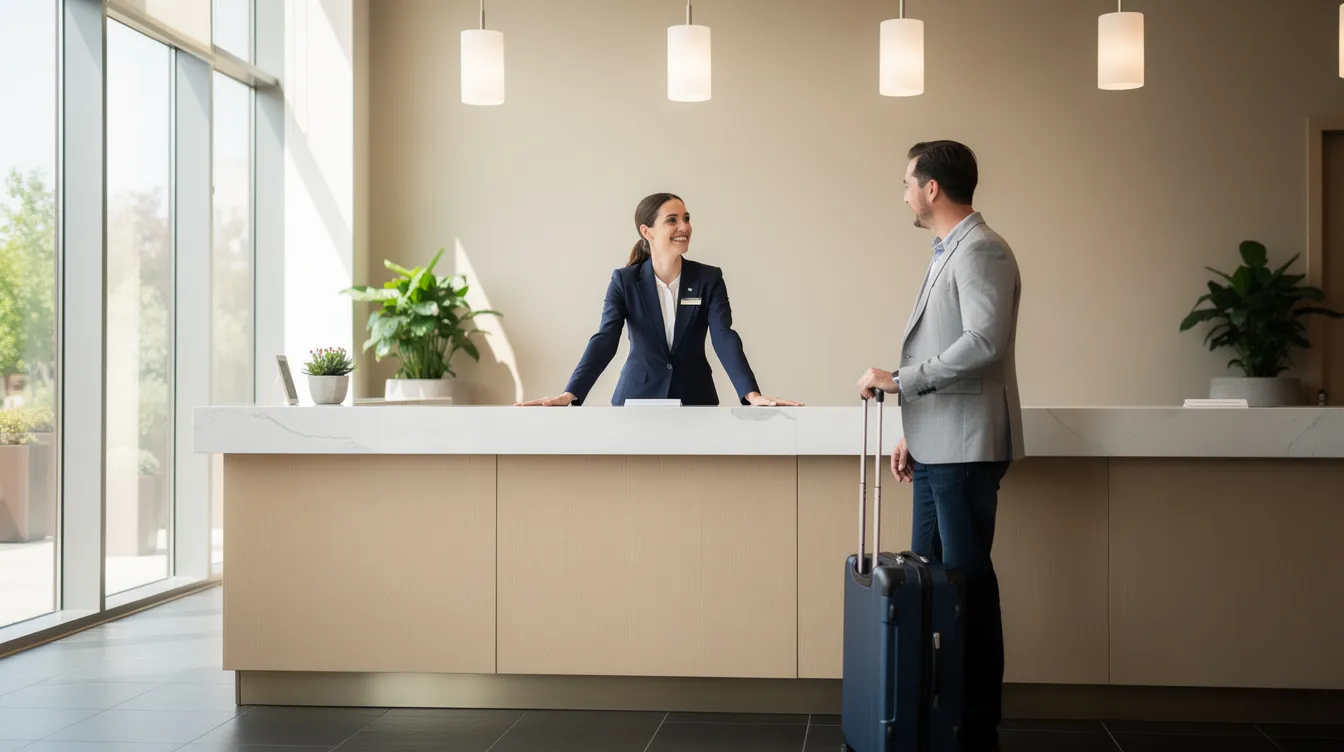
Clarifying the Performance Goal: What Should the Microlearning Achieve?
Hotel guest service microlearning design must start with a clear, measurable performance goal, not with "we need some videos." Effective training reduces complaints and enhances employee confidence only when the target behavior is specific enough to observe and measure.
Translate business issues into learning goals:
Business Problem | Learning Goal |
|---|---|
Check-in queues longer than 8 minutes | Reduce check-in handling time by 30 seconds by Q2 2027 |
Upsell conversion below 10% | Increase suite or breakfast upsell to 15% within six months |
Low cleanliness scores in mid-stay surveys | Raise mid-stay cleanliness rating by +0.3 on a 5-point scale |
In a regional hotel chain pilot, mobile microlearning modules plus manager dashboards reduced average check-in time by roughly 15 percent and increased upgrade conversion by approximately 12 percent over six weeks. A separate pilot study found that 83 percent of front desk staff showed measurable behavior improvement in guest greeting after completing a micro-module on that skill.
Narrow your scope by focusing on moments that matter in the guest experience: arrival and welcome, first room impression, service recovery, late checkout, and billing disputes. Customer feedback from online reviews, post-stay NPS, and on-property QR surveys should be analyzed upfront. Integrating real guest data into training can enhance relevance for hotel staff and ensure lessons target actual recurring failures rather than hypothetical ones.
Mapping Roles and Journeys: Who the Microlearning Is For
Hotel staff training only works when it is role-specific and aligned to real workflows. A front desk agent deals with check in procedures and complaint handling. A housekeeping team member focuses on room readiness and special requests. F&B servers must master guest interactions, upselling, and timing of service. A single hotel may need to train multiple departments weekly, each with distinct priorities.
Create learner personas that reflect reality. A new front desk associate hired in July 2026 on a seasonal contract at a resort needs different training content than an experienced night manager at a city-center business hotel. Map the employee lifecycle into distinct phases:
Day 1 onboarding: orientation, service standards, safety basics
First 14 days: core tasks, PMS usage, greeting guests, eye contact protocols
First 90 days: advanced customer service training, upselling, service recovery
Ongoing development: refresher modules, leadership skills, complex topics
High turnover rates necessitate effective soft skills training for new hires at every stage. For multi-property groups, keep 70–80 percent of hospitality training content standardized across locations while customizing 20–30 percent for property type. Airport hotels emphasize speed and efficiency during peak hours. Resorts emphasize leisure knowledge and guest experience design. Extended-stay properties focus on long-term relationship building.
Structuring Micro Lessons: From Topic List to Lesson Blueprint
Hotel guest service microlearning design requires breaking the curriculum into tightly scoped lessons, each focused on one behavior. Microlearning modules for hotel staff should be concise and focus on specific skills. Effective microlearning requires one clear, actionable objective per module.
Examples of lesson atoms:
Greeting guests in under 10 seconds when they approach the front desk.
Confirming and repeating special requests to avoid missed amenities.
Handling a late-checkout request when occupancy is over 90 percent.
Active listening: restating a guest concern before proposing a solution.
Handling overbooking: offering upgrades, apologies, and compensation.
Microlearning modules typically last from 30 seconds to five minutes, though effective microlearning takes between 3 and 10 minutes to complete depending on complexity. Each lesson should follow a consistent structure: one clear objective, 1–2 key concepts, one scenario drawn from real world situations, 2–4 practice questions, and one application prompt encouraging real world application on the next shift.
Group modules into short learning paths. A 40-minute "Arrival Experience" path built from 8–10 micro lessons lets staff complete segments between tasks, supporting flexible scheduling. Differentiate between foundational lessons (greetings, active listening, safety basics) and advanced modules (upselling suites, handling VIP guest complaints, managing difficult situations). This creates a progression that helps every staff member learn at the right level and reinforces learning over time.
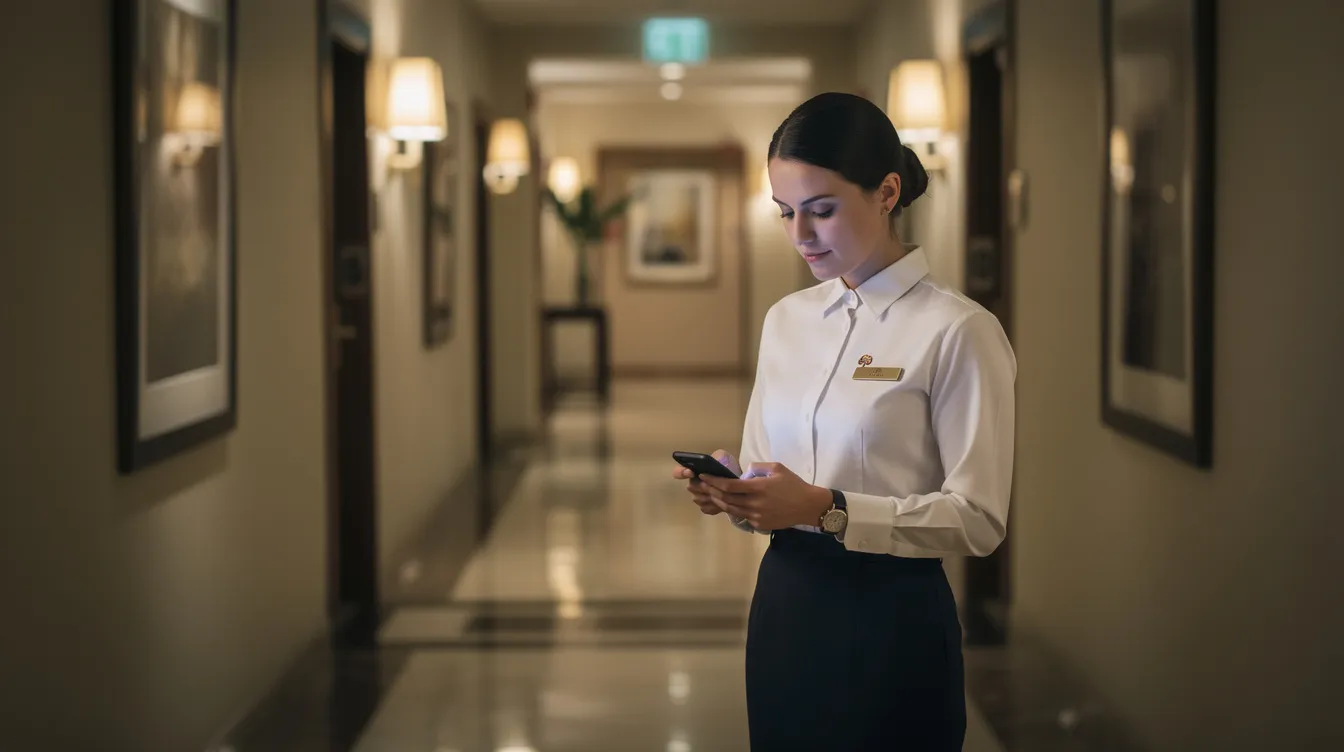
Designing for Real Guest Interactions: Scenarios, Empathy, and Service Recovery
Scenario-based learning improves real-time decision-making for hotel staff and enhances the applicability of training content. Emotionally charged guest experiences, such as overbooking on a holiday weekend, noisy neighboring rooms, or mis-posted folio charges, demand practice in context rather than abstract rules.
Design realistic scenarios drawn from actual incidents captured in guest complaints, complaint logs, and mystery shopper reports. Empathy training enhances guest interactions and satisfaction scores when it moves beyond theory into on-screen demonstrations. Include side-by-side examples of good versus poor listening, with guests expressing frustration or confusion, so colleagues can see the difference tone and phrase choice make.
Branching scenarios work well in micro format. Offer 2–3 decision points with immediate feedback:
A guest requests late checkout but occupancy is 95 percent. You can (A) promise to try, (B) offer a partial late checkout with luggage storage, or (C) decline outright. Each choice triggers a different guest reaction and shows the potential impact on customer satisfaction scores.
Soft skills training improves employee confidence and service delivery across all departments. This includes communication, teamwork, and problem-solving, the capabilities that help staff handle unexpected guest situations effectively. Balance brand voice with authenticity. Scripts should reflect the hotel's tone without sounding robotic. Localize phrasing for different regions and ensure scenarios capture diverse guest demographics.
Media and Production Choices: Selecting the Right Format for Each Skill
Hotel service skills course production should match media type to learning need rather than defaulting to one format. Using multimedia formats such as videos and infographics keeps learning engaging and supports different formats for different skill types.
Format | Best For | Example |
|---|---|---|
Live-action short video | Body language, service presentation | 90-second clip of complaint handling at front desk |
Animation / motion graphics | Policy explainers, safety steps | 3-minute explainer on credit-card dispute procedures |
Interactive simulation | PMS workflows, system tasks | Walk-through of a check in screen with branching inputs |
PDF / checklist job aids | Quick reference on shift | Nightly audit checklist, room inspection list |
Design assets for reusability. One lobby shoot can support several microlearning modules covering greeting, queue management, and upselling scenes. Digital signage can deliver training content without new hardware investment, using existing break-room screens for passive reinforcement. Accessibility matters: include on-screen captions for multilingual staff, ensure clean audio for noisy back-of-house areas, and cast talent that represents the hotel's workforce and guest diversity.
Delivery, Devices, and Accessibility: Getting Microlearning to Frontline Teams
Hotel staff are largely deskless and time-poor, making delivery design as important as the microlearning content itself. Mobile-first training is essential for hotel staff due to their fast-paced work environment. Microlearning fits into busy work schedules because modules can be completed in the gaps between tasks.
Common delivery environments include:
Staff mobile phones with mobile access to an LMS or training app
Shared tablets at the front desk or back office
Back-office PCs for longer interactive simulations
Smart TVs in break rooms for group viewing during pre-shift huddles
Mobile accessibility requires vertical video framing where appropriate, large tap targets, download-friendly file sizes for low-bandwidth properties, and offline options for staff with limited connectivity. Build microlearning slots of 5–7 minutes into pre-shift briefings, daily huddles, or between housekeeping turns. Provide options for night shift workers who cannot attend daytime sessions.
Integration with existing LMS or HRIS platforms matters for enterprise clients. Use SCORM or xAPI packaging so completion rates and quiz data flow into existing systems. Enable SSO for hotel staff and configure role-based assignment rules so front desk employees receive relevant modules, not housekeeping content, and vice versa across departments.
Measurement and Iteration: Linking Training to Guest Experience Metrics
Customer service training justifies its investment only when it connects to measurable guest experience and operational metrics. Regular feedback and assessment are necessary for effective skill retention in training. Structured training is essential for maintaining service consistency, and training modules should reflect the specific service standards of the hotel.
Use a simple measurement framework:
Level 1–2: Completion rates and quiz scores confirm engagement and knowledge retention
Level 3: Supervisor observations and peer audits confirm behavior change on the floor
Level 4: Operational and customer feedback metrics confirm business impact
Tie specific microlearning paths to specific outcomes:
Front desk service recovery modules linked to reduction in refund and comp nights
Housekeeping microlearning linked to mid-stay cleanliness survey scores
F&B upsell training linked to average check value in the lobby bar
Digital badges can incentivize completion and recognition of training among hotel staff, boosting motivation across teams. In one large hotel group's micro-content program, highly engaged employees saw up to four times better improvements in loyalty recognition performance.
Validate results using customer feedback sources: online reviews, post-stay surveys, and on-property QR kiosks. Look for language shifts in reviews that mention new concepts staff have trained on, such as "greeted us immediately" or "resolved the issue on the spot." Run an iterative improvement cycle: analyze data monthly or quarterly, identify underperforming lessons, update scenarios or wording, and re-launch micro modules without rebuilding the entire course. This delivers measurable improvements and measurable impact over time.
Keeping Content Current: Updates, Seasonality, and Brand Changes
Hotel policies, offerings, and guest expectations change frequently. Microlearning allows rapid updates to training content and can be updated quickly to reflect new policies, making modular design essential.
Structure micro courses so that a policy change, such as new loyalty benefits launched in March 2027, updated late-checkout rules, or new spa packages, requires swapping out only 1–2 lessons instead of recreating the full path. Plan seasonal microlearning: short refreshers before peak holiday periods focusing on queue management, overbooking handling, and VIP recognition help frontline teams stay sharp when volume spikes.
Establish governance processes: assign content ownership across L&D, operations, and brand standards teams. Conduct quarterly content audits. Maintain version control across multilingual updates so English, Spanish, French, or other language editions stay aligned. Outdated translations in certain regions create service quality gaps that undermine the entire training program.
Client Source Material and Collaboration: What We Need to Build Effective Courses
Successful hotel guest service microlearning design depends on high-quality, property-specific source material from the client. Essential items include:
Current brand standards manuals and SOPs for guest service, front desk, housekeeping, and F&B
Property photos or video of lobby, guestrooms, breakfast area, and bar to inform realistic visual design
Anonymized customer feedback data (review extracts from 2024–2026, NPS comments, complaint logs)
PMS screenshots with sensitive data removed to support system-walkthrough lessons
Stakeholder interviews with GMs, department heads, and frontline staff capture actual pain points, workarounds, and examples of great service and service failures. Brand language guides covering tone of voice, taboo phrases, and preferred greetings ensure scripts match the hotel's identity. Collaborative design workshops with client teams help prioritize topics, define success metrics, and agree on rollout timelines, whether the project spans one property or twenty.
Project Phases and Handoff: From Discovery to Ongoing Support
A typical end-to-end hotel guest service microlearning production project follows five phases:
Discovery and analysis (2–4 weeks): performance goals, data review, stakeholder interviews
Design (3–6 weeks): curriculum map, lesson blueprints, media decisions, sample scripts and storyboards
Production (4–10 weeks): filming, animation, interaction builds, QA
Pilot and refinement (4–8 weeks): launch at 1–3 properties, gather user and customer feedback, adjust
Scale and handoff: rollout plan, admin training, and documentation
At handoff the client receives finalized microlearning modules in agreed formats, source project files, style guides, facilitator notes for blended sessions, and an implementation checklist. Peer-to-peer learning boosts engagement and reinforces training effectiveness in hotels, so facilitator notes should include guidance for managers on encouraging colleagues to share real situations and practice together.
Ongoing support includes quarterly content tune-ups, new modules for emerging needs such as a new PMS or brand program, and data review sessions focused on improving guest experiences. These sessions create effective learning experiences that evolve alongside the business rather than gathering dust.
Ready to build a microlearning program that delivers happier guests, service excellence, and a strategic investment in your team? Discuss a custom course-production project with Course Crafters by Masterly at https://www.thecoursecrafters.com/ or call (404) 726-7261.
Frequently Asked Questions about Hotel Guest Service Microlearning Design
What source material should the client provide?
Clients should prepare current SOPs, service standards, brand guidelines, and any training decks used since at least 2022 so designers can align microlearning with existing hotel operations and expectations. Anonymized customer feedback, including reviews, NPS data, and complaint logs from the last 12–24 months, is essential for targeting real guest experience gaps. Operational documents matter too: shift checklists for front desk and housekeeping, upsell scripts, safety protocols, and PMS workflows. Any previous hotel staff training materials such as PowerPoints, PDFs, or classroom handouts help identify what should be reused, updated, or replaced in the new microlearning series.
How should the training be updated after launch?
Plan for a quarterly review of training analytics, including completion rates and quiz scores, alongside customer satisfaction and feedback trends to decide which modules need a refresh or expansion. Nominate internal content owners in each department who can flag policy or process changes. Modular design allows quick replacement of outdated clips, text, or examples while keeping the core course structure intact, minimizing production cost. Conduct an annual strategic review to align hospitality training content with new brand initiatives, technology changes, and evolving guest expectations.
Discuss your project: Course Crafters by Masterly - https://www.thecoursecrafters.com/ - (404) 726-7261
