Corporate Learning Solutions for Businesses
Corporate Learning Solutions: Building a Repeatable Training System Around Real Work
Most corporate training fails not because the content is bad, but because it exists outside the work it's supposed to improve. Employees sit through courses, check boxes, and return to their desks without changing a single behavior. Course Crafters by Masterly builds custom corporate learning solutions around real work, existing processes, and measurable business outcomes-not around a catalog of generic courses.
Whether your priority is onboarding, leadership development, compliance training, sales enablement, operations training, or workforce development, the goal is the same: a repeatable system that produces tangible results every time you run it.
This page is written for HR, L&D, and business leaders who need a training system built for 2026 and beyond. Here is what you can expect from our approach:
Learning embedded in the tools and workflows your employees already use
Personalized learning paths that connect to real job roles and career growth
Measurement tied to business outcomes, not just completion rates
A system that scales from one pilot program to enterprise-wide deployment
Continuous learning and professional development built into daily work
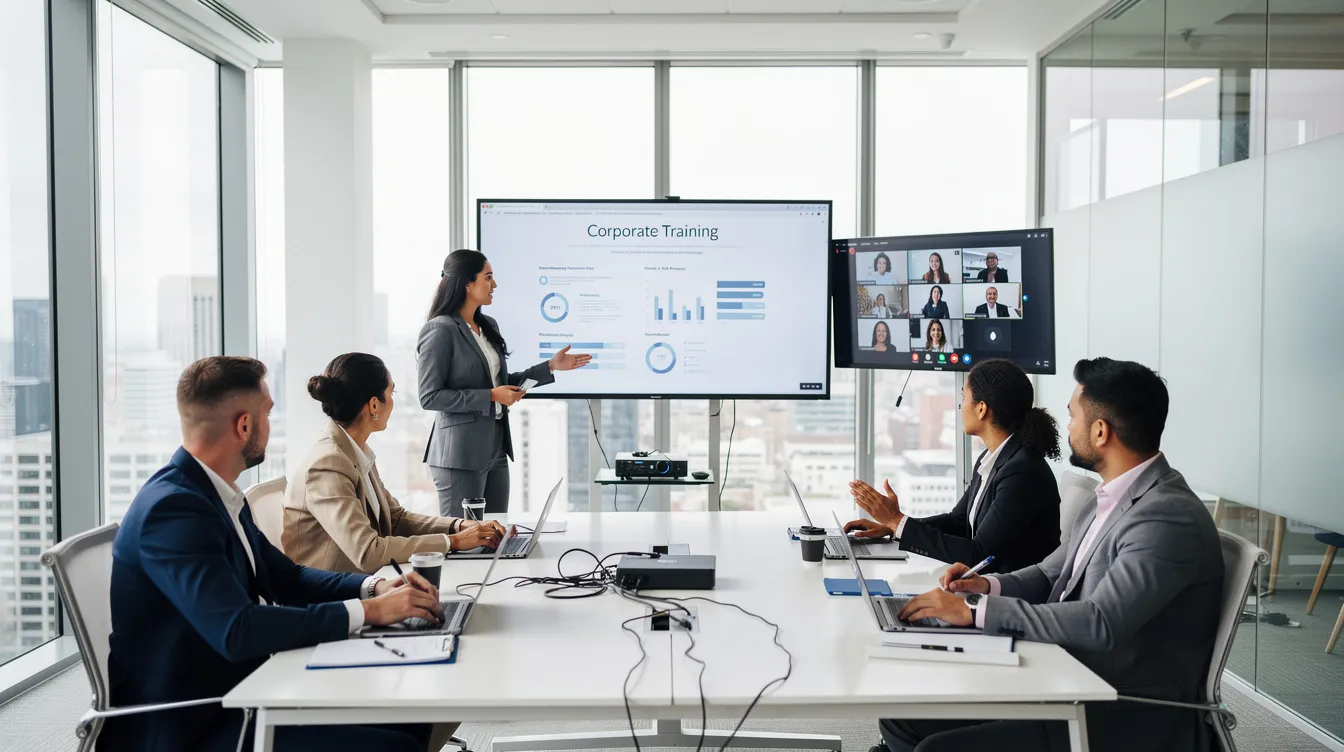
What We Mean by "Corporate Learning Solutions" (and What We Don't)
Corporate learning solutions encompass a wide variety of tools and methodologies-but the term gets misused. Buying an LMS license is not a solution. Purchasing a content library is not a solution. A solution is an integrated combination of strategy, training programs, content, technology, and measurement that supports continuous learning tied to real work.
Effective corporate learning solutions align training with business goals. Companies can align corporate learning to specific skill needs, and corporate training solutions improve employee skills and performance across every level of the organization.
Here is how we draw the line:
This is a corporate learning solution | This is not |
|---|---|
Repeatable training system with defined outcomes | One-off workshop with no follow-up |
Learning embedded in Salesforce, Jira, or HRIS | Standalone course library employees rarely visit |
Measurement of behavior change and business KPIs | Tracking completions and satisfaction scores only |
Content designed around real scenarios and decisions | Generic slide decks repackaged as eLearning |
Concrete business outcomes we help organizations achieve include faster ramp for new hires, fewer compliance incidents and fines, higher sales conversion rates, lower rework and error rates in operations, and improved retention in the first year of employment.
Core Use Cases for Corporate Learning Solutions in 2026
The use cases for corporate learning vary, but the underlying system stays consistent. Here are the programs we build most frequently:
Onboarding: Structured learning paths for the first 30, 60, and 90 days. Customized onboarding improves job retention rates by 25% and reduces time to productivity by 50%. Role-specific training is a key component, and customized onboarding aligns new hires with company culture from day one.
Leadership development: Tiered programs for emerging leaders through senior executives, building leadership abilities in coaching, decision-making, and change management.
Compliance training: Scenario-based modules that reduce risk through standardized curriculums and move beyond annual click-through requirements.
Sales enablement: Product knowledge, objection handling, and reinforcement programs tied to quota attainment and win rates.
Operations training: Process standards, safety protocols, and cross-skilling programs that cut errors in lean environments. This includes supply chain and quality management training.
Customer service: Escalation handling, communication frameworks, and system-use training for frontline teams.
Implementing effective corporate learning solutions helps bridge skill gaps across all of these areas. Organizations focus on closing skill gaps through targeted training rather than broad, unfocused content pushes-and the programs support both frontline workers and knowledge workers in hybrid and remote environments.
Design Principles: Building Learning Around Real Work, Not Abstract Content
Every learning solution we build connects to real tasks, systems, and decisions. Adult learners prefer relevant and engaging training content, which means abstract lectures and information dumps do not work.
Our design is grounded in instructional design principles drawn from adult learning theory-relevance, autonomy, prior experience, and problem solving:
Scenario-based learning: Learners practice real world scenarios such as handling a customer complaint, navigating a compliance gray area, or coaching a direct report through a performance conversation. Experiential learning methods enhance knowledge retention far beyond passive reading or watching.
Practice with feedback: Every module includes application tasks with peer feedback or facilitator review, not just knowledge checks.
Spaced repetition: Content is revisited over days and weeks to build lasting impact, not crammed into a single session.
Performance support embedded in workflows: Performance support tools assist with task execution on demand-step-by-step guides inside CRM screens, checklists embedded in project management tools, quick-reference cards available at the point of need.
AI-powered adaptive learning systems personalize training content based on individual progress, role, and performance gaps. AI-driven personalized coaching tailors content based on individual needs, surfacing the right reinforcement at the right time.
Deeper understanding over information transfer: We design for application, decision-making, and reflection-not just recall. Complex concepts are broken into practice-ready chunks tied to real decisions employees face daily.
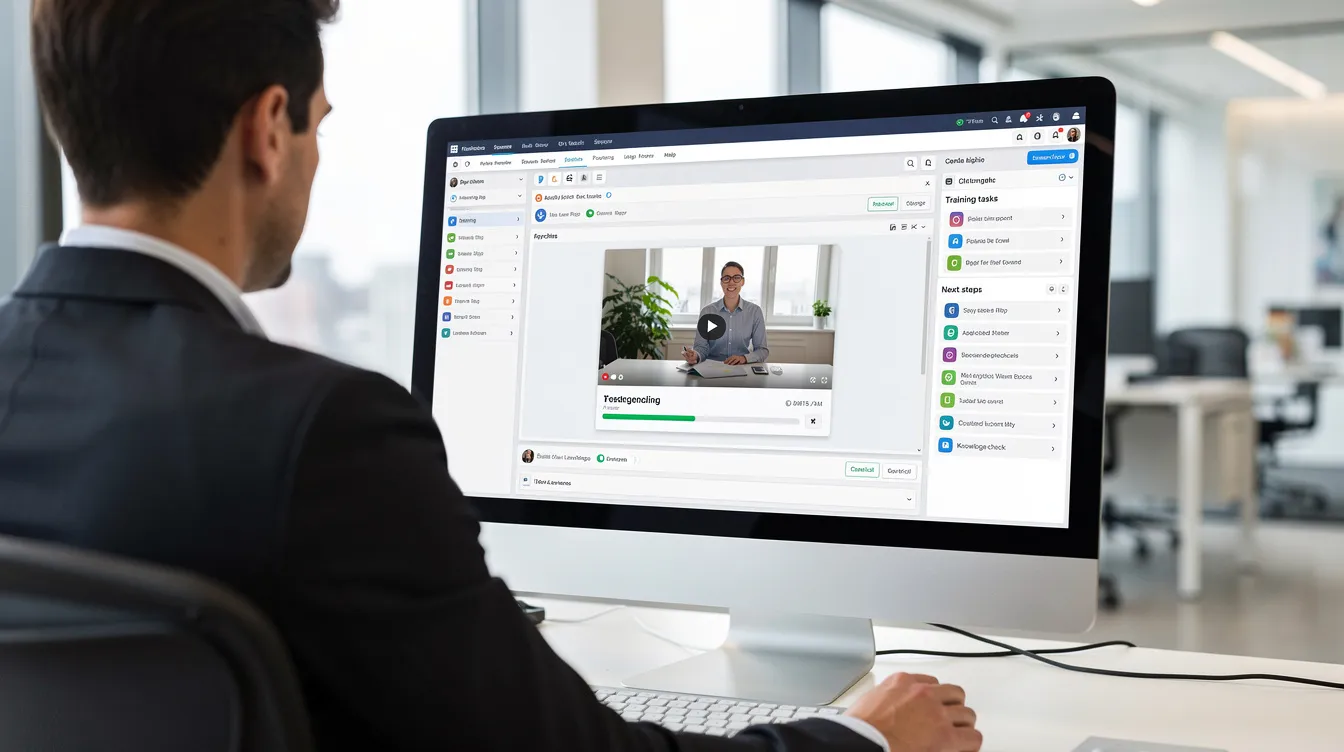
Blended Learning Architectures: How We Combine Digital, Live, and On-the-Job Practice
Blended learning combines online and in-person training methods into a single coherent architecture. It enhances employee skills and adaptability while offering flexibility for professional growth across schedules and locations.
A typical 12-week leadership development path might look like this:
Weeks 1–2: Self-paced microlearning modules on core frameworks (15 minutes each)
Week 3: Live virtual workshop with role-play practice and facilitator coaching
Weeks 4–6: On-the-job application assignments with manager check-ins
Week 7: Peer coaching circle via Microsoft Teams or Slack
Weeks 8–10: Advanced scenario simulations with interactive content
Week 11: In-person practice lab with peer feedback
Week 12: Reflection, assessment, and action planning
This structure supports continuous learning without overwhelming calendars-10 to 15 minute weekly touchpoints plus monthly deep dives.
Blended learning caters to diverse learning styles effectively. Engagement activities in blended learning include quizzes and games that reinforce key concepts. Gamification increases learner engagement through interactive elements, and gamification introduces game-like elements to motivate employees through healthy competition and progress tracking. We use existing collaborative platforms like Microsoft Teams, Slack, and Zoom to support social learning and knowledge sharing across locations.
End-to-End Corporate Learning Services We Provide
Over 30,000 workforce training projects have been delivered globally using the methodologies we apply. Effective training starts with a training needs analysis, and every engagement follows a clear service path. Customized corporate training addresses unique organizational challenges at each stage:
Needs analysis: Skills gap assessments, stakeholder interviews, role and task analysis. Deliverables include skills matrices and priority maps.
Learning strategy: Curriculum architecture, learning paths by persona, and technology recommendations. We work with your existing learning management systems rather than forcing a new tech stack.
Content design: Instructional designers build scenario-based modules, facilitator guides, and job aids. Content libraries provide ready-to-use courses from external providers where appropriate, supplemented with custom content.
Content production: eLearning modules, video, interactive simulations, and curated content packages. Microlearning offers short, focused training sessions for busy professionals. Immersive learning utilizes AR and VR for experiential training scenarios where the use case justifies it.
Implementation support: LMS configuration, pilot launches, train-the-trainer sessions, and learner communications.
Optimization: Post-launch analytics reviews, content updates, and iterative improvement based on learner and business data.
Social and collaborative learning encourages peer-to-peer knowledge sharing throughout each phase. We partner with your internal subject-matter experts to translate tacit knowledge into scalable training programs that remain relevant as your business evolves.
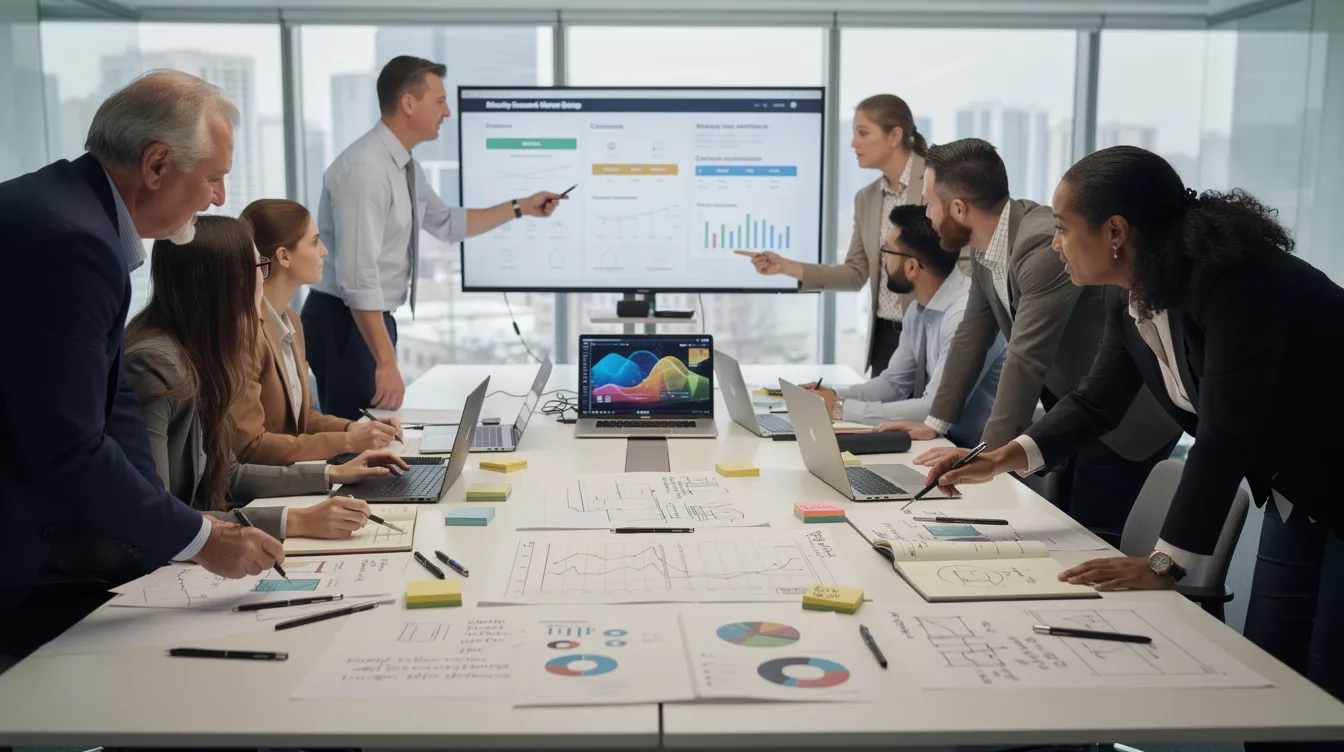
Key Programs: Onboarding, Leadership, Compliance, Sales, and Operations
Each of these programs uses the same repeatable system principles-needs analysis, blended design, workflow embedding, and measurement. Here is what they look like in practice:
Onboarding: A structured learning journey across the first 30, 60, and 90 days. Includes checklists, microlearning, manager touchpoints, and mentorship programs that enhance the effectiveness of customized onboarding. Customized onboarding improves job retention and cultural integration. Metrics: time-to-first-sale, time-to-first-closed-ticket, 90-day retention rate.
Leadership development: Leadership programs enhance decision-making and communication skills through tiered curricula for emerging leaders, mid-level managers, and senior leaders. Effective leadership programs include executive coaching and workshops focused on communication, coaching ability, and change leadership. Organizations investing in leadership development see improved performance across their teams and lower voluntary turnover among high-potential employees.
Compliance training: We move beyond click-through courses with scenario-based modules, annual refreshers, and just-in-time performance support. Research shows that while 90% of leaders believe employees can apply compliance policies, actual scenario-based readiness scores average only 64.5%. Our approach closes that gap through judgment-based practice, not just knowledge recall.
Sales enablement: Product knowledge training, objection handling simulations, role-play labs, and ongoing reinforcement. Programs track leading indicators (certification, completion) alongside business outcomes like quota attainment and revenue growth. Informed decisions during live deals come from practiced skills, not memorized scripts.
Operations training: Process training, quality standards, safety protocols, and cross-skilling programs. These reduce errors, support lean environments, and develop essential skills across frontline teams. Project managers and supervisors receive targeted development alongside their teams.
Building a Repeatable Corporate Learning System: From One Pilot to Enterprise Scale
Most organizations start with a single training initiative-an onboarding program or one leadership cohort. The challenge is moving from that isolated pilot to a coherent, enterprise-wide system.
Here is how we help organizations embrace change and scale:
Start with a pilot: Pick one high-impact program, establish templates and design standards, and prove results before expanding.
Create shared infrastructure: Common design templates, a single intake process for new training requests, and governance for content updates ensure consistency.
Align with HR processes: Connect learning solutions to performance reviews, career paths, and succession planning to support employee development and professional development at every stage.
Scale across regions: Allow localized content for languages, regulations, and cultural context while maintaining a unified system. This is critical for global organizations operating across multiple business units.
Build a future ready workforce: The system itself becomes a competitive advantage-every new program launches faster because the architecture already exists.
Continuous learning cultures enhance adaptability to changing market conditions. A future proof system is not about predicting every training need; it is about having the tools and processes ready to respond quickly when business needs change.

Measurement: Connecting Learning and Development to Business Outcomes
Corporate learning solutions should be evaluated for alignment with business outcomes at multiple levels. Key performance indicators include knowledge retention and performance improvement-not just how many people finished a course.
Our measurement framework covers four levels:
Level | What We Measure | Data Sources |
|---|---|---|
Completion & satisfaction | Course completion, learner ratings | LMS reports, surveys |
Learning | Knowledge and skill gains | Pre- and post-training assessments measure knowledge gains effectively |
Behavior | On-the-job application, manager observations | Performance dashboards, manager feedback |
Business impact | Revenue, retention, error rates, cycle times | HRIS data, CRM reports, operational metrics |
Regular evaluation through surveys provides insights into training effectiveness and highlights where programs need adjustment. Learning management systems help track learner progress and engagement across all programs. Data-driven insights track engagement and improve training ROI over time.
Research from D2L shows that organizations collecting ROI metrics consistently rate their learning programs as "always effective" at more than double the rate of those that do not measure (42% vs. 18%). Employee retention improves with robust professional development opportunities-making measurement not just an accountability exercise but a growth strategy.
We encourage pre- and post-training baselines and A/B comparisons where possible, giving leaders the data they need to make informed decisions about where to invest next.
How We Work With Corporate Learning Owners and L&D Teams
Our services support existing learning and development owners-we act as partners and capacity multipliers, not replacements. Customized corporate training addresses unique organizational challenges that internal teams may not have the bandwidth or specialized resources to tackle alone.
Joint planning workshops with HR, IT, operations leaders, and business unit heads
Co-design sessions with your subject-matter experts and our instructional designers
Iterative prototyping with feedback loops before full launch
Flexible engagement models: project-based (design one program), managed services (ongoing content production), or strategic advisory (learning strategy and governance)
We develop solutions that fit your company culture, your technology stack, and your team's capacity to deliver training and sustain programs over time.
Getting Started: From Discovery Call to Deployed Corporate Learning Solution
Here is the path from first conversation to a live program creating maximum impact:
Discovery: Clarify goals, audiences, timelines, constraints, and existing platforms. You receive a high-level design concept and roadmap.
Design blueprint: Detailed curriculum architecture, learning paths, and content specifications.
Prototype and pilot: Build a working version of the first program, test with a real cohort, and collect data.
Scale and support: Roll out across departments, regions, or business units with ongoing optimization and continuous improvement.
There is no obligation in the first conversation. We can start small with one critical training program and grow from there.

Discuss a custom corporate learning solution with Course Crafters by Masterly. Contact us at (404) 726-7261 to start building a repeatable training system that drives real growth and innovation.
