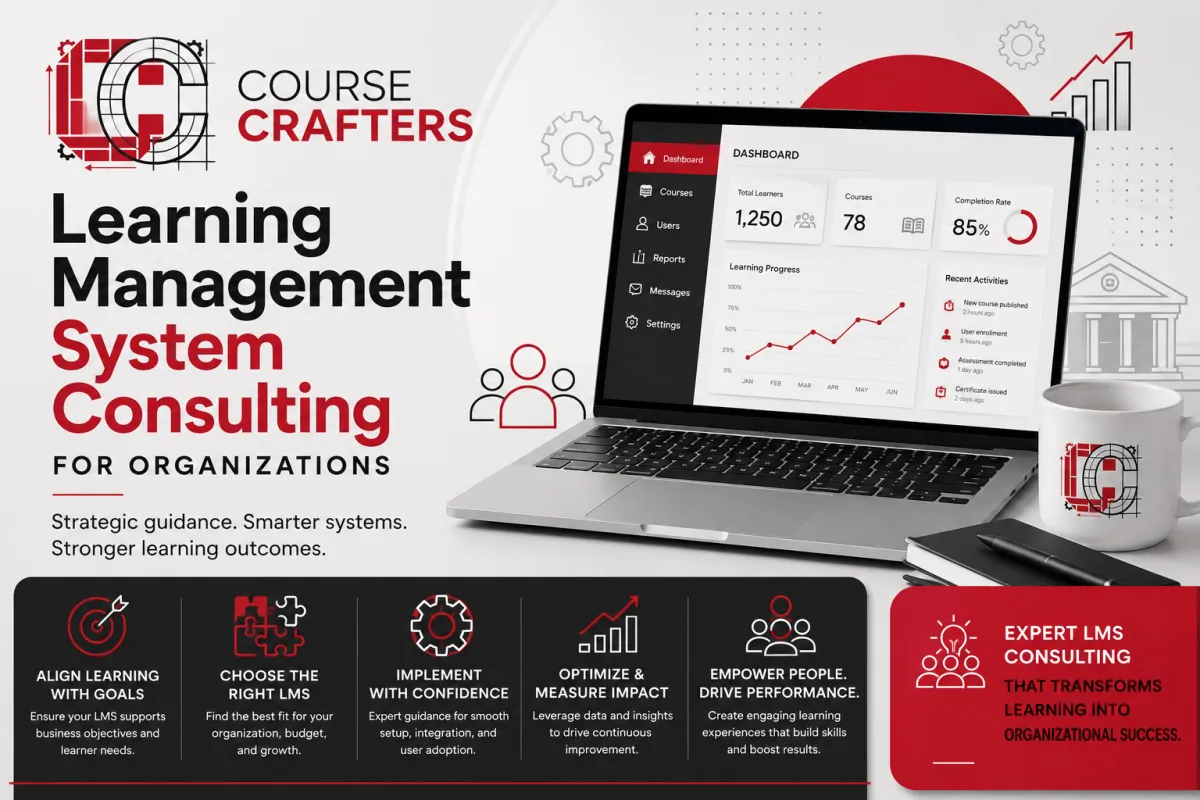
Learning Management System Consulting for Organizations
Learning Management System Consulting for Organizations
Learning management system consulting is professional advisory work that helps organizations choose, deploy, and optimize the platforms they use to deliver training, track learner progress, and manage compliance. It is not just about picking software. Learning Management System (LMS) consulting helps organizations select and implement learning platforms across the full lifecycle: strategy, lms selection, lms implementation, optimization, and ongoing governance.
The audience for this kind of engagement is broad. Associations launching online certification programs, nonprofits scaling employee development, corporate L&D and HR teams modernizing how they deliver training, and SaaS companies building customer education academies are all evaluating lms platforms right now. Common triggers include purchasing a first lms, replacing a legacy learning management system, executing a multi-country rollout, or consolidating systems after a merger.
An experienced consultant connects technology, people, and learning goals so that organizations reduce risk and reach value faster. An LMS consultant helps connect technology to organizational learning strategies. Organizations typically start with a 45–60 minute lms consulting session to validate direction before committing to a larger engagement.

What an LMS Consultant Actually Does
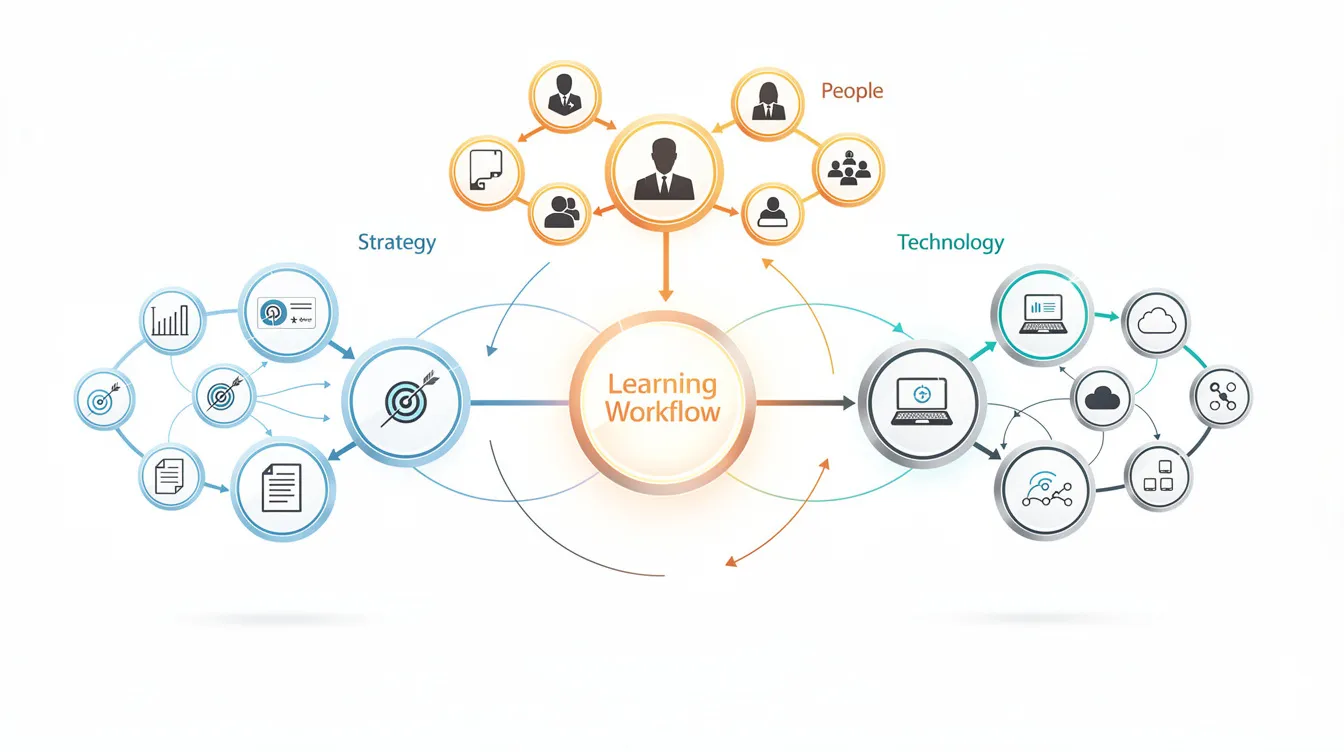
LMS consultants provide tailored solutions for unique organizational needs, working across strategy, technology, and people. Their responsibilities span the entire project arc, from first conversation to post-launch refinement.
Core activities include:
Needs analysis and strategic alignment. A comprehensive needs assessment is crucial for successful lms implementation. A comprehensive needs assessment identifies specific organizational needs by gathering qualitative and quantitative data from stakeholders across HR, L&D, legal, compliance, and enablement. Prioritized needs are documented to define business requirements. Conducting a needs assessment is crucial for successful lms implementation because it aligns investment decisions with organizational goals.
LMS roadmap creation. Consultants help align lms with business objectives and learning goals, translating targets like "reduce onboarding time by 20%" or "achieve 95% compliance in safety training" into concrete platform requirements.
Platform evaluation and vendor facilitation. Running RFI/RFP processes, coordinating sandbox demos, and facilitating informed decisions across stakeholder groups.
Configuration and pilot planning. Designing data structures, user roles, learning paths, certification workflows, and mobile learning support.
Post-launch optimization. Effective lms consulting continues after go-live with health checks, analytics reviews, and release-management guidance. Post-launch support is an important aspect of lms consulting services.
What separates a specialist lms consultant from a general IT consultant is the combination of instructional design expertise, change management skill, and lms integration knowledge. LMS consultants must understand industry-specific requirements to provide effective solutions, whether that means healthcare compliance rules, financial services audit trails, or manufacturing safety standards. Consultants provide training and communication strategies to facilitate adoption of new lms platforms from day one.
When It's Time to Bring in LMS Consulting Services
Not every organization needs outside help. But certain situations make lms consulting services the difference between a smooth rollout and a costly failure.
Common signals include:
Stalled projects. Your lms implementation has been stuck in procurement or configuration for months, with no clear path forward.
Low lms adoption. Learners and managers are ignoring your current lms, and internal teams lack the expertise to diagnose why.
Confusing vendor landscape. You've received demos from eight vendors and still can't confidently narrow lms options to a shortlist.
Timeline pressure. You're targeting a new lms launch before January 2027 and can't afford a 6–12 month delay caused by internal learning curves.
Repeated rollout failures. Previous implementations ended with low engagement, poor data integrity, or abandoned platforms.
Consulting is valuable when migrating from one lms to another or when launching a new lms for the first time. Specific organization types where this applies: associations expanding online certification, SaaS companies scaling customer academies, universities moving from Blackboard to Brightspace, and enterprises migrating from on-premises management systems to cloud solutions.
Complexity amplifies risk. Multiple business units, dozens of integrations with other systems, and multi-language catalogs all increase the value of bringing in external expertise. Even smaller teams benefit from a focused 4–6 week strategy and selection sprint before committing to a full implementation.
Strategic LMS Selection: Choosing the Right Platform
LMS selection should align with business objectives and learning outcomes. This is primarily a business strategy exercise, not a feature comparison. Common LMS selection pitfalls include vague requirements and poor vendor evaluation, which lead organizations to pick platforms that look impressive in demos but fail in practice.
A tailored selection process considers business requirements and IT standards through a structured progression:
Discovery and requirements gathering. Effective LMS selection requires well-documented business requirements covering learner personas, content types, compliance needs, and integration points with hr systems and other tools.
Longlist and shortlist. Evaluating lms systems across categories: employee lms for compliance and onboarding, extended enterprise lms for customer or partner training, and blended learning solutions combining instructor-led with self paced learning.
RFI/RFP and scoring. Building weighted criteria that rank must-have versus nice-to-have system capabilities.
Demos, sandbox testing, and reference checks. Testing with real content and real workflows, not generic sales scenarios.
Evaluation factors that matter include scalability to 50,000+ learners, mobile learning apps, microlearning support, AI-based recommendations, multi-tenant portals, xAPI and SCORM compliance, and reporting capabilities tied to business case priorities.
Vendor neutrality is critical. Consultants should be paid by clients, not through hidden reseller commissions. A use-case-driven approach to the selection process-where demos are based on specific workflows like compliance escalation or partner onboarding-has produced measurable results. One financial services organization reduced overdue compliance completions by roughly 35% within six months after selecting a platform aligned to its actual operational needs.
Planning and Scoping Your LMS Implementation
A comprehensive implementation plan ensures long term success. Without one, even the right lms becomes a burden rather than an asset.
A typical lms implementation plan moves through these phases:
Discovery. Confirming detailed requirements, learner segments, content inventory, and integration dependencies.
Configuration. Setting up user profiles, roles, permissions, learning paths, certification logic, and customization options that balance complexity with ease of maintenance.
Integrations. Connecting the lms to HRIS, CRM, SSO providers, and virtual classroom platforms.
Content migration. Moving courses, assessments, and historical records from the current lms or legacy systems.
Testing. Sandbox validation, pilot groups, performance testing.
Go-live and stabilization. Phased rollout with monitoring.
For a mid-sized organization, realistic timelines span 12–20 weeks from kickoff to stable operation. Regular project check-ins and clear methodologies help manage lms implementation successfully throughout this period. LMS implementation should focus on data integrity and system integrations as foundational priorities.
Clearly-defined roles are essential: executive sponsor, project manager, lms administrator, learning designers, subject matter experts, and the vendor implementation team. ROI analysis helps evaluate costs against expected benefits, covering software licensing, implementation services, internal time allocation, content production, and administrator user training.

Seamless LMS Implementation, Integration, and Migration
With planning complete, the execution phase is where seamless implementations happen-or fall apart. Effective lms integration enhances user engagement and learning outcomes, so this phase deserves careful attention.
Integration points typically include:
HRIS for automatic user provisioning and offboarding
CRM for customer or partner learning enrollment
Identity providers (SAML, OAuth) for SSO
Virtual classroom tools like Zoom or MS Teams
Content authoring platforms and other systems in the learning ecosystem
LMS consultants work alongside IT and internal teams to design data flows, test APIs, and ensure reliable syncs for user data, enrollments, and completion records. These integrations connect the lms to one platform ecosystem rather than leaving it isolated.
LMS migration is often the most technically sensitive step. A tailored migration plan is crucial for successful lms transitions. Consultants map courses, learning paths, historical completion data, certificates, and competencies from legacy platforms. Practical constraints arise: full migration is sometimes realistic, but other times it makes more sense to archive the old system for read-only access and start fresh on the new lms.
Testing is non-negotiable. Sandbox environments, pilot groups of 50–200 learners, performance tests, and content compatibility checks across SCORM, xAPI, video, and assessments all reduce go-live risk. Organizations that follow this approach often see lms implementation cut training time by 40–60% compared to their previous state. Effective lms implementation reduces training time by 40–60%, and lms consulting can reduce implementation costs by 60%.
Driving LMS Adoption, Engagement, and Change Management
Technology alone does not guarantee lms adoption. The most common reason organizations re-implement an lms within three years is not a bad platform-it is poor change management and a failure to design for real learner behavior.
User experience design is crucial in lms consulting to enhance learner engagement. Consultants analyze learner journeys and simplify catalog structure, search, and navigation to match how people actually look for learning content. A seamless user experience boosts lms adoption and engagement across the organization.
Practical UX and content strategies include:
Plain-language course titles that map to job roles, not internal jargon
Clear learning paths with customized learning pathways that improve user engagement significantly
Role-based dashboards showing learner progress and recommended next steps
Support for discussion forums and discussion boards that enable peer feedback and knowledge sharing
Personalized recommendations that create a richer learning experience
Change management tactics go beyond email announcements. Consultants provide support through stakeholder mapping, sponsorship alignment, communications plans, launch campaigns, and role-specific training for leaders, managers, learners, and admins. User training is essential for maximizing lms effectiveness post-implementation.
Adoption metrics to track over the first 90 days include login rates, course starts, completion percentages, time-to-first-course, and repeat visit rates. Organizations consistently report a 20% increase in learner engagement through interactive learning when these strategies are applied. A well-implemented lms can increase learner engagement by 20%, and effective lms consulting improves learner engagement by 20%.
This people-centered approach turns the learning management system from a compliance box-checker into a strategic hub for formal training, knowledge transfer, and employee development.
Governance, Data, and Continuous LMS Optimization
Governance is what keeps an lms sustainable after the launch excitement fades. Without it, organizations face "lms sprawl": duplicate courses, conflicting certificates, inconsistent naming, and declining platform trust.
Effective governance structures include:
Steering committees with representation from L&D, IT, compliance, and business units
Release-management processes that coordinate updates, new features, and content changes
Content standards covering naming conventions, metadata tagging, version control, and approval workflows
Analytics dashboards tracking course engagement by role, completion rates by geography, and correlation with performance KPIs
Data analytics in lms consulting helps monitor student performance and engagement levels. Ongoing analytics can drive improvement in lms connected training programs by surfacing patterns that manual review would miss. Modern analytics tools within enterprise grade lms platforms increasingly use AI for recommendation engines, skill-gap analysis, and predictive risk indicators-identifying opportunities for intervention before learners fall behind.
Customization strategies in lms should balance between ease of maintenance and complexity. Continuous improvement cycles include quarterly health checks, backlog grooming for feature or UX enhancements, and iterative catalog refinements. This discipline ensures long term success and prevents the slow decay that leads to costly re-implementations.

What to Look for in an LMS Consultant or LMS Consulting Firm
Not all consultants bring the same expertise. Here's what to evaluate:
Vendor neutrality. The consultant should be paid by your organization, not through platform commissions. Ask directly about reseller relationships.
Multi-platform knowledge. Look for demonstrated experience across multiple lms platforms (Moodle, Canvas, Docebo, Cornerstone, TalentLMS, and others) rather than allegiance to a single vendor.
Instructional design background. Technology solutions alone don't create effective learning. Look for expertise in learning processes, course creation, e learning design, and mobile learning strategy.
Integration and technical skills. Proven ability to manage lms integration with HRIS, CRM, SSO, and virtual classroom systems.
Sector and industry knowledge. Healthcare compliance, manufacturing safety, SaaS customer education, higher education-each domain carries specific requirements. Educational institutions and government agencies have regulatory contexts that differ sharply from corporate environments.
Measurable proof. Request case studies with dates and business outcomes. Ask for sample deliverables and references from similar-size organizations.
Cultural fit. Communication style, decision-making approach, and the ability to work collaboratively with internal teams matter as much as technical skills.
Structure an initial discovery call around goals, constraints, timeline, and success measures-not around jumping straight into tools. An experienced consultant will provide insights into your situation before recommending any specific platform aligns with your needs.
Cost, Timelines, and Risk: Setting Realistic Expectations
Typical project durations:
Structured lms selection: 6–10 weeks
Mid-sized implementation: 3–6 months
Global rollout with heavy integrations: 9–12+ months
The corporate LMS market is projected to reach US$27.4 billion by 2030, and with that growth comes increased platform complexity. Maximizing LMS ROI requires evaluating costs, benefits, and risks upfront.
Key risk areas that lms consulting addresses include overspending on licenses, picking an ill-fitting system, data loss during lms migration, adoption failure, and compliance gaps. An effective lms can reduce learning costs by 20–50%, and organizations see a 40–60% reduction in training time compared to traditional methods.
Frame cost discussions in terms of ROI: reduced training travel, fewer manual admin hours, or faster time-to-productivity for new hires. Strong planning and change management help organizations avoid a cost effective re-implementation cycle that wastes budget every 2–3 years.
How to Prepare Internally Before Starting an LMS Consulting Engagement
A little preparation before engaging consultants dramatically accelerates the implementation process and improves the quality of every consulting session.
Practical steps to get ready:
Gather existing documentation. Pull current lms reports, course catalogs, compliance requirements, and IT architecture diagrams. Even partial information gives consultants a running start.
Identify key stakeholders early. Include HR, L&D, IT, security, line-of-business leaders, legal, and unions or works councils where applicable. Identifying opportunities for cross-functional input early prevents surprises later.
Draft an initial vision statement and success metrics. Something concrete like "Reduce mandatory training completion time by 25% within 12 months" gives the engagement focus.
Prepare sample data. Headcount by location, languages spoken, current tools in use, number of active learners-this kind of information accelerates discovery.
List must-have integrations. Even a draft list of the systems your lms needs to connect with (HRIS, SSO, CRM) sharpens early conversations.
Even partial preparation-like a draft learner persona or a list of technical issues with your current lms-can significantly improve the speed and depth of consulting sessions. Clients who arrive prepared get more cost effective engagements and reach the right lms faster.

Next Steps: Requesting an LMS Consulting Session
Professional lms consulting supports better platform selection, smoother implementation, stronger lms adoption, and measurable business outcomes. It turns learning management from a cost center into a strategic enabler of growth, compliance, and retention.
If your organization is actively evaluating or planning lms changes in the next 6–18 months, consider requesting an initial lms consulting session. Here's what to expect:
A review of your goals, constraints, and current learning management systems
A high-level assessment of where you stand and what gaps exist
Recommended next steps tailored to your timeline and budget
Bring specific questions about lms platforms, lms migration plans, integrations, or change management to make the consultation immediately valuable. The organizations that invest in structured, expert guidance consistently avoid the expensive missteps that come from navigating this landscape alone.
Request an LMS consulting session to validate your direction and start building the foundation for a learning platform that actually delivers results.
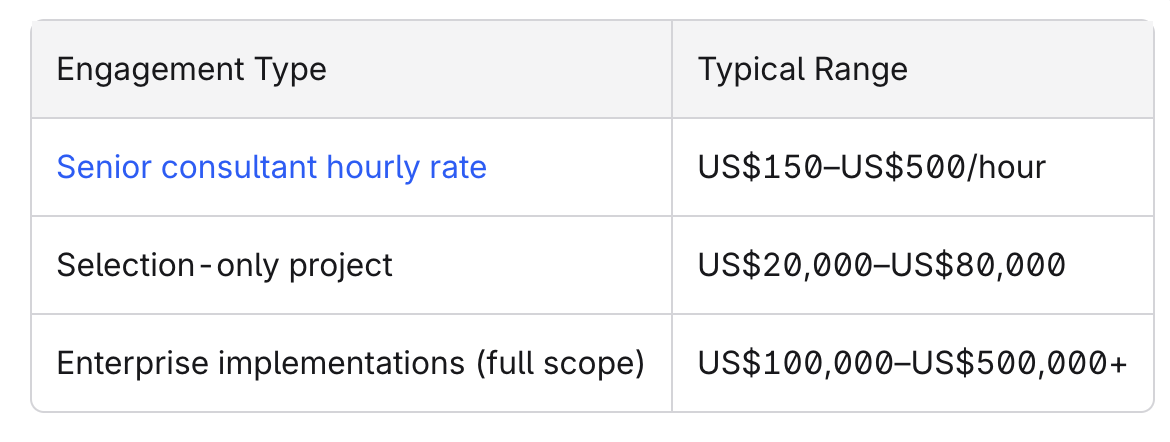
Typical project durations:
Structured lms selection: 6–10 weeks
Mid-sized implementation: 3–6 months
Global rollout with heavy integrations: 9–12+ months
The corporate LMS market is projected to reach US$27.4 billion by 2030, and with that growth comes increased platform complexity. Maximizing LMS ROI requires evaluating costs, benefits, and risks upfront.
Key risk areas that lms consulting addresses include overspending on licenses, picking an ill-fitting system, data loss during lms migration, adoption failure, and compliance gaps. An effective lms can reduce learning costs by 20–50%, and organizations see a 40–60% reduction in training time compared to traditional methods.
Frame cost discussions in terms of ROI: reduced training travel, fewer manual admin hours, or faster time-to-productivity for new hires. Strong planning and change management help organizations avoid a cost effective re-implementation cycle that wastes budget every 2–3 years.
How to Prepare Internally Before Starting an LMS Consulting Engagement
A little preparation before engaging consultants dramatically accelerates the implementation process and improves the quality of every consulting session.
Practical steps to get ready:
Gather existing documentation. Pull current lms reports, course catalogs, compliance requirements, and IT architecture diagrams. Even partial information gives consultants a running start.
Identify key stakeholders early. Include HR, L&D, IT, security, line-of-business leaders, legal, and unions or works councils where applicable. Identifying opportunities for cross-functional input early prevents surprises later.
Draft an initial vision statement and success metrics. Something concrete like "Reduce mandatory training completion time by 25% within 12 months" gives the engagement focus.
Prepare sample data. Headcount by location, languages spoken, current tools in use, number of active learners-this kind of information accelerates discovery.
List must-have integrations. Even a draft list of the systems your lms needs to connect with (HRIS, SSO, CRM) sharpens early conversations.
Even partial preparation-like a draft learner persona or a list of technical issues with your current lms-can significantly improve the speed and depth of consulting sessions. Clients who arrive prepared get more cost effective engagements and reach the right lms faster.
Next Steps: Requesting an LMS Consulting Session
Professional lms consulting supports better platform selection, smoother implementation, stronger lms adoption, and measurable business outcomes. It turns learning management from a cost center into a strategic enabler of growth, compliance, and retention.
If your organization is actively evaluating or planning lms changes in the next 6–18 months, consider requesting an initial lms consulting session. Here's what to expect:
A review of your goals, constraints, and current learning management systems
A high-level assessment of where you stand and what gaps exist
Recommended next steps tailored to your timeline and budget
Bring specific questions about lms platforms, lms migration plans, integrations, or change management to make the consultation immediately valuable. The organizations that invest in structured, expert guidance consistently avoid the expensive missteps that come from navigating this landscape alone.
Request an LMS consulting session to validate your direction and start building the foundation for a learning platform that actually delivers results.
Schedule an LMS strategy and migration consultation today. Visit www.thecoursecrafters.com or contact our team directly at (404) 726-7261 to schedule a tour of Masterly Studios and discover how our expert services can transform your learning management system experience.
