Multi-Location Compliance Training | Course Crafters
Compliance training development is the structured process of identifying legal and regulatory requirements, designing targeted learning experiences, deploying them across your organization, and measuring their impact over time. For HR, L&D, and operations leaders at companies with locations spread across the U.S., Canada, and Europe, it is one of the most consequential investments you can make.

The regulatory landscape has shifted rapidly. ESG reporting mandates have seen a 74% increase over the last four years, driven largely by the EU's Corporate Sustainability Reporting Directive. In the U.S., 24 states now have comprehensive consumer privacy laws on the books, with effective dates staggering through 2028. OSHA adjusted maximum penalties upward again in 2024, with willful violations now exceeding $160,000 each. For multi-location employers, this means the rules your California store follows are not the same rules governing your Texas warehouse or your Ontario distribution center.
The specific risk is inconsistent training between sites, varied interpretations of policies, and uneven documentation that weakens your legal defense after an incident. A well-designed compliance training program directly supports workplace safety, ethical conduct, data protection, and harassment prevention, tying to measurable reductions in incidents and a stronger organizational culture.
Course Crafters specializes in custom compliance training for multi-location employers, bringing expertise in jurisdiction-aware program design and scalable delivery.
This article walks through the end-to-end compliance training development process, common pitfalls, and when to bring in expert support to ensure consistency across every site you operate.
Understanding Compliance Training Development
Compliance training development is not the same as browsing a vendor catalog and assigning courses. It is a structured, cyclical process: analyzing your legal and policy obligations across every jurisdiction where you operate, designing learning solutions that align with those obligations, deploying training to the right roles at the right locations, and measuring whether it actually changes behavior.
Here is what separates this from generic off-the-shelf courses:
Training should align with internal policies and relevant regulations, not just general legal summaries. A generic harassment module will not address California's specific supervisor training mandate or Quebec's language requirements.
Compliance training programs must meet local, state, and federal laws simultaneously. That means content must be jurisdiction-aware, not one-size-fits-all.
The main topics typically covered include workplace safety (OSHA and local equivalents), anti-harassment and discrimination, code of conduct, data protection and IT security, anti-bribery and anti-corruption, and industry-specific regulations like HIPAA, FDA, or PCI-DSS.
The average cost of noncompliance is $14.82 million, dwarfing what organizations spend on building compliant programs.
The process is cyclical: analysis, design, development, implementation, reporting and measurement, then updates. The rest of this article follows that logic.
Clear objectives and role-specific content are essential for effective compliance training. Without them, you are checking a box rather than managing risk.
Key Risks for Multi-Location Employers
Multi-location operations, whether a retailer with 150 stores, a manufacturer with plants in three countries, or a healthcare network with regional clinics, face amplified compliance risk when training is fragmented. One location may receive up-to-date harassment prevention content while another runs a module that has not been revised in three years. A warehouse in one state may interpret PPE requirements differently than a plant across the border.
Consider specific scenarios: California mandates annual harassment training for supervisors and non-supervisors alike, while Texas has different content requirements. A satellite office may be running outdated data-security modules, exposing the company to privacy breach liability under GDPR or state laws. These gaps create real exposure:
Regulatory risk: OSHA penalties for willful violations now exceed $160,000 per instance. State privacy fines can scale quickly across affected individuals.
Workplace safety incidents: inconsistent training leads to variation in injury rates, lost workdays, and near-miss frequency across sites.
Reputational risk: one location's misconduct or safety failure can damage brand trust nationally or globally, especially in a 24-hour news cycle.
Operational risk: high turnover driven by safety fears, production stoppages, and the challenge of coordinating training across different reporting structures, where some employees report to regional managers and others to functional leads.
Fragmented reporting and analytics compound the problem. When senior leaders cannot pull a coherent compliance picture during an investigation or M&A due diligence, the organization is exposed.
Core Components of an Effective Compliance Training Program
High-performing companies treat compliance training as a system of interlocking components rather than a set of standalone courses. When you tailor training content to specific roles, you enhance effectiveness across every location.
The core components include:
Governance and ownership: someone must be accountable for each compliance domain, whether that is a Chief Compliance Officer, regional compliance leads, or designated L&D owners. Without clear accountability, gaps persist.
Policy and content library: maintain a central, version-controlled repository of up-to-date policies and training materials, reviewed by legal and compliance professionals on a defined schedule.
Role-based curricula: different teams need different training. Frontline workers need hands-on safety and data privacy basics. Supervisors need reporting obligations and leadership behavior modules. Executives need oversight on ESG and ethical risk.
Delivery technology: an LMS or learning platform that supports assignment by role, location, and language, tracks completions, and integrates with HRIS for automatic enrollment of new hires and transfers.
Reporting and analytics: the ability to generate reports by location, manager, or topic, identify overdue completions, and analyze assessment scores. In one documented case, consolidating seven LMSs into a single platform raised completion rates from 78% to 99.4%.
Accessibility and localization: content must be accessible (WCAG-compliant, captioned, screen reader-compatible) and available in multiple languages. For North American employers, that often means English, Spanish, and French, with legal references localized per jurisdiction.
These components also define the core competencies a compliance program should develop: ethical decision-making, risk recognition, proper reporting behavior, data-handling fundamentals, and a safety mindset. This is the design checklist Course Crafters uses when scoping work for multi-location employers.
Designing for Multiple Locations, Roles, and Reporting Structures
The central challenge is giving every employee what they need without creating 50 completely different programs that become impossible to maintain. The answer is modular architecture and smart segmentation.
Start by segmenting learners by role and risk level: frontline retail staff, plant operators, remote knowledge workers, store managers, regional VPs, and corporate functions like HR and finance. Research shows that 68% of employees prefer learning in their work context, meaning content must feel relevant to their actual job, not a generic legal lecture.
A proven strategy is building a global core curriculum that every employee completes: code of conduct, anti-harassment fundamentals, data privacy basics, and workplace safety essentials. Then layer on region- or role-specific modules, such as California harassment law for West Coast locations, DOT regulations for drivers, or HIPAA modules for clinical roles.
Role-based learning narrows the gap between learning and application. Companies with role-based training report higher retention rates, and personalized training can reduce training time by up to 40%. That time savings compounds across thousands of employees and dozens of locations.
Account for different reporting structures as well. Some locations have local HR and safety committees; others rely on centralized teams. Training should clearly instruct employees where and how to report concerns in their specific context. Inside the LMS, define role-based learning paths like "Line Supervisor – Food Plant" or "Store Manager – Northeast Region" so assignments stay accurate as people move between roles or locations.
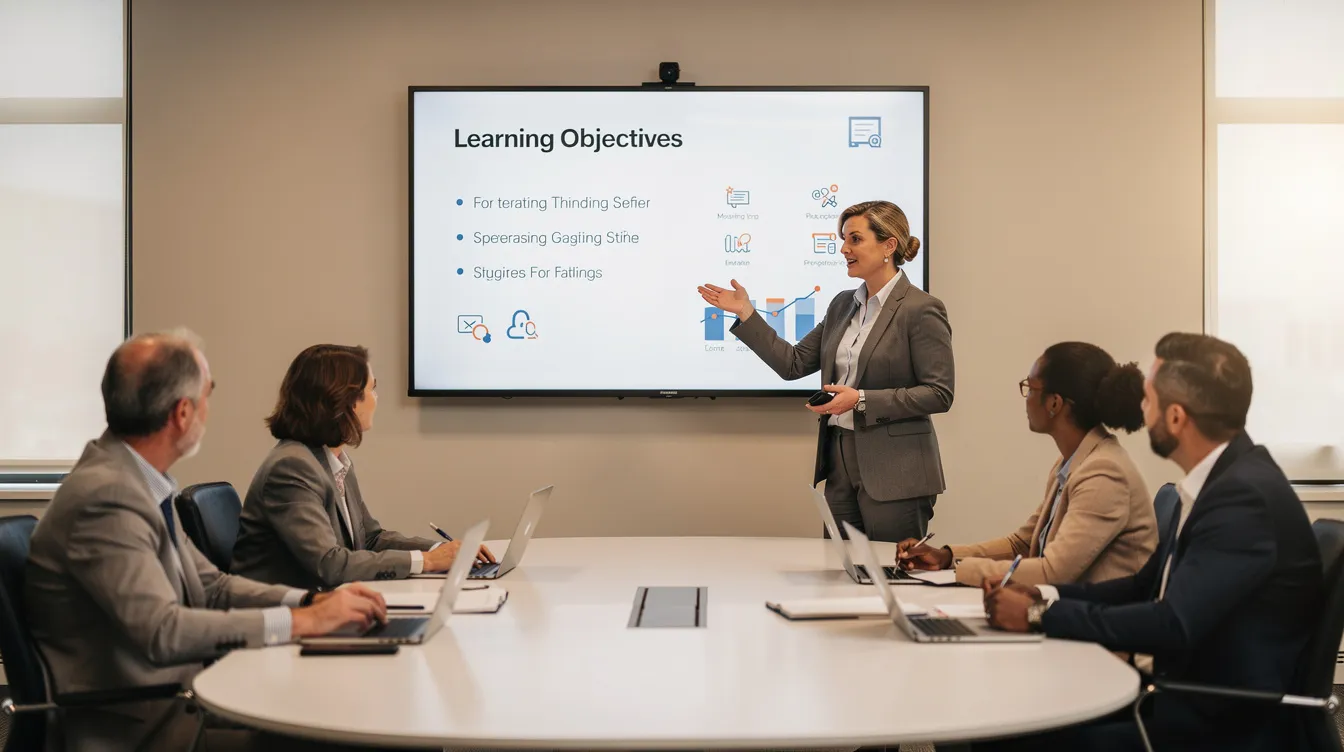
A simple way to visualize this: the global core forms the base layer, region-specific modules sit on top, and role-specific modules form the top layer. Reporting and accountability flow from each location up through regional leads to corporate compliance.
From Risk Assessment to Curriculum Plan
Compliance training should be a risk-based continuous process, not a one-time project. In practice, that means starting with a structured compliance risk assessment across all locations, then translating findings into a prioritized curriculum roadmap.
Here are the concrete steps:
Review regulatory obligations by jurisdiction: OSHA requirements, state-level privacy laws, provincial safety laws in Canada, EU directives including the CSRD for ESG reporting. Include upcoming legislation with near-term effective dates.
Analyze incident and claim data from the last three to five years, broken out by site. Look for patterns: which locations have elevated injury rates, harassment complaints, or data incidents?
Interview stakeholders: HR, safety officers, legal counsel, and site leaders. What recurring issues surface? What knowledge gaps do employees display?
Inventory existing training: vendor courses, internal materials, informal practices. Note languages, roles covered, completion rates, and how recently content was refreshed.
Rank risks by impact and likelihood. High-probability, high-severity risks like data breaches in consumer-facing roles, severe warehouse injuries, or retaliation complaints get priority. Map each high-priority risk to specific learning objectives, such as reducing struck-by injuries, preventing phishing-based breaches, or improving complaint handling.
Convert objectives into a curriculum plan: mandatory annual courses, onboarding modules, refresher microlearning, and targeted interventions for high-risk roles or locations with incident spikes. When Sensata Technologies restructured its compliance training into smaller, targeted modules across 16 languages, completion rates rose to 99% and their Total Recordable Incident Rate fell roughly 44%.
Course Crafters typically documents this as an 18- to 24-month roadmap, phasing compliance training development so it is realistic rather than a one-time blitz.
Key Features of High-Impact Compliance Training Content
What you teach and how you teach it both determine whether employees change behavior. Content design quality matters as much as subject accuracy. Use diverse formats to accommodate different learning styles in training delivery, and keep the focus on practical application.
Key features of effective training content include:
Scenario-based learning grounded in real incidents from your industry: a warehouse slip-and-fall hazard, a data leak caused by improper sharing, a retaliatory harassment scenario. Incorporating storytelling helps employees apply policies to their day-to-day work.
Short modules with clear outcomes. Microlearning sessions typically last 3 to 7 minutes, making them easy to fit into a shift. Longer modules should stay within 10 to 20 minutes and deliver a single, measurable competency.
Use interactive elements like quizzes and case studies for engagement. Built-in practice through knowledge checks, simulations, and decision trees reinforces learning far more than passive video.
Workplace safety exercises with real-world context: interactive hazard-spotting for warehouses, lockout/tagout simulations for maintenance staff, PPE donning demonstrations. Realism supports risk reduction.
Accessibility: WCAG-compliant design, captions and transcripts on video, screen reader-compatible modules, and attention to color contrast. This meets legal obligations and ensures inclusion for employees with disabilities.
Multilingual content for multi-location employers. Simply translating slides is not enough. Examples, imagery, and legal references must be localized for each region.
Current digital realities: phishing simulations, social engineering scenarios, and guidance on safe AI tool use, such as not pasting sensitive data into public AI tools.
Consistent corporate branding and leadership messages. A short CEO video explaining why compliance matters anchors culture rather than treating training as a checkbox. This kind of engaging content signals organizational commitment.
Technology, Delivery, and Reporting at Scale
Multi-location compliance training development depends on the right technology stack to deliver consistently, track completions, and generate defensible reporting across every site.
The typical backbone is a learning management system or learning platform that can assign courses by role, team, and location, automate reminders, and record completion data, quiz scores, and policy acknowledgments. Adaptive learning adjusts content based on employee performance, letting advanced learners move faster while flagging those who need reinforcement.
For multi-location employers, the platform must support:
Multiple time zones, regional administrators, and language variants of courses so that each location receives relevant, correctly timed assignments.
Integration with HRIS systems so that new hires and transfers are automatically enrolled in appropriate compliance training without manual intervention.
Mobile and offline access for distributed workforces. Field technicians, store associates, and shift workers need responsive design or dedicated apps that enable just-in-time learning on any device.
Robust reporting supports risk management directly. You should be able to pull a completion report by location, manager, or topic for any date range, generate audit-ready documentation, and identify locations with overdue rates or poor assessment scores. Companies should measure compliance training effectiveness with KPIs, not just track whether training was assigned.
A practical reporting cadence might include weekly location-level status updates, monthly regional roll-ups, and quarterly corporate reports to leadership. AI authoring tools can also streamline compliance training content creation, reducing time from draft to deployment.
Course Crafters typically designs content to be platform-agnostic using SCORM and xAPI standards, so employers can host it in their existing LMS while still benefiting from detailed reporting and analytics. This software flexibility ensures you are not locked into a single vendor.
Assessments, Certification, and Proving Competence
Regulators, insurers, and courts increasingly expect employers to demonstrate not just completion rates, but actual understanding. Assessment should evaluate knowledge retention and application, not only attendance. The goal is to measure true behavioral changes rather than just completion rates.

Effective assessment approaches include:
Knowledge checks embedded within modules to reinforce learning in real time, scored quizzes at the end of courses, and scenario-based questions where learners choose actions in realistic situations.
Practical demonstrations for safety-critical roles: correct donning of PPE, proper machine shutdown sequences, emergency response procedures. You can create tests that combine written and practical elements.
Clear thresholds for passing and defined recertification cycles. California requires annual anti-harassment certification. HIPAA privacy and security training is typically refreshed annually or biennially. Forklift safety recertification is required annually in most warehouses.
Align assessments with core competencies: evaluate not just recall of policy language, but the ability to spot a conflict-of-interest situation or respond correctly to a safety hazard. Measuring performance improvement is crucial for training effectiveness. Performance improvement compares business results before and after training, giving you data that matters to leadership.
Completion rates indicate how relevant employees find training content, but they are only one signal. Maintain consistent assessment standards across locations so that a passing score in one state or country reflects the same level of competence as in another.
Documentation of training materials and participation is necessary for audits. Capture digital acknowledgments of key policies alongside course completions, and store that data centrally where HR and legal teams have unlimited access when they need it.
Maintaining, Updating, and Localizing Compliance Content
Compliance training development is never finished. Laws change, new risks emerge such as AI misuse and deepfake scams, and company policies evolve after incidents or mergers. Regularly update the training curriculum to reflect changes in laws and risks.
Build a formal governance process:
Designate owners for each content area: safety, privacy, HR, ethics. Schedule annual and midyear reviews, and define triggers for out-of-cycle updates such as a new law's effective date, a serious incident, updated regulatory guidance, or a consent decree.
Build and maintain a change log that tracks what changed, why, and when. During an audit or investigation, you can show the evolution of your compliance training program with full version history.
When a global template changes, such as an updated anti-bribery policy, local variants must be updated and re-approved. Establish a lightweight workflow for reviewing translations and region-specific legal references so no location runs outdated materials.
Practical strategies to streamline updates include modular course structures and reusable learning objects that let you revise a single section without rebuilding an entire course. AI authoring can streamline compliance training content creation, reducing the resources and turnaround time required for each update cycle. Modern authoring tools also support rapid localization across multiple languages.
Course Crafters or a similar partner can act as a long-term content steward, handling periodic updates, localization coordination, and quality checks. This frees internal teams to focus on the policy and risk decisions that require their direct knowledge of operations.
Building a Culture of Compliance Across Sites
Even the best-designed compliance training program fails if local leaders treat it as a checkbox. Compliance training should be integrated into organizational culture as an ongoing process, reinforced through daily actions and visible commitment.
Secure visible leadership support to foster a culture of compliance. Executives and regional leaders should open training modules with personal messages, reference compliance topics in town halls, and model expected behaviors consistently, whether that means wearing PPE on a plant tour or completing a phishing simulation alongside their team.
Empower local managers and supervisors with facilitator guides, short discussion prompts tied to recent incidents or near-misses, and microlearning pieces they can share in team meetings to keep main topics fresh. This creates a safe environment where compliance is a shared responsibility, not an annual interruption.
Recognition and accountability drive adoption. Celebrate locations with high completion and low incident rates. Integrate compliance behaviors into performance reviews. Address non-participation or policy violations consistently across sites so that every work environment operates under the same expectations.
Psychological safety is foundational. Train employees on how to report concerns and guarantee non-retaliation. Provide tools like anonymous hotlines, digital reporting systems, and ombudsperson programs. Feedback from employees can identify areas for improvement in training programs, surfacing blind spots that top-down design may miss.
Measure culture indicators over time using surveys that assess perceptions of fairness, respect, and safety. Track complaint volumes, patterns, and near-miss reporting rates. These signals, combined with training data, help you advance your approach and refine initiatives where they matter most.
When to Bring in Professional Help with Compliance Training Development
Some organizations can manage compliance training development internally. But multi-location scale, complex regulations, and tight timelines often justify external expertise. Consider that 61% of compliance professionals find regulations overwhelming, and that number rises with every new jurisdiction you enter.

Concrete triggers for seeking professional support include:
Expanding into new countries or states with unfamiliar regulations.
Repeated incidents, fines, or failed inspections at specific sites.
An upcoming consent decree, external audit, or M&A transaction that surfaces compliance gaps.
A major technology shift, such as migrating to a new LMS, where content must be rebuilt or restructured.
A specialist like Course Crafters adds value by conducting comprehensive gap assessments, designing role-based learning paths across locations, creating custom content aligned with company policies, ensuring accessibility and localization, and advising on reporting structures that satisfy both legal and leadership expectations. External partners also support change management, equipping local leaders to champion new programs and communicate the reasoning behind updated training.
When choosing a partner, look for experience with multi-location and multi-jurisdiction employers, strong instructional design credentials, references with measurable results such as reduced incidents or improved completion rates, and a clear approach to maintaining content over time.
Next Steps: Planning Your Compliance Training Development Roadmap
This article has traced the full arc: from understanding compliance training development and assessing risks, through designing role-based multi-location curricula, to leveraging technology, assessments, and ongoing updates that keep your program current and defensible.
To move forward, identify your top three compliance risks by location. Audit your existing training to determine what is current, what is outdated, and what is missing entirely. Define core competencies by role so you can build targeted learning paths. Evaluate your current delivery and reporting tools against the requirements outlined above. Then decide which pieces demand external support and which your team can handle internally.
Use the upcoming 12 to 18 months as a planning horizon. Consider using Q4 2026 to finalize your risk analysis and curriculum map. Target early 2027 to roll out new core modules and pilot programs in your highest-risk regions. Use subsequent quarters to extend role-based paths, refine assessments, and implement the digital transformation of your training infrastructure for long-term success and productivity gains across the business.
If your organization is ready to move from planning to execution, request a custom compliance-training development consultation with Course Crafters. A typical engagement begins with a structured discovery call and results in a tailored roadmap built for your multi-location footprint. That first conversation costs nothing but can clarify priorities that protect your people, your operations, and your future.
